
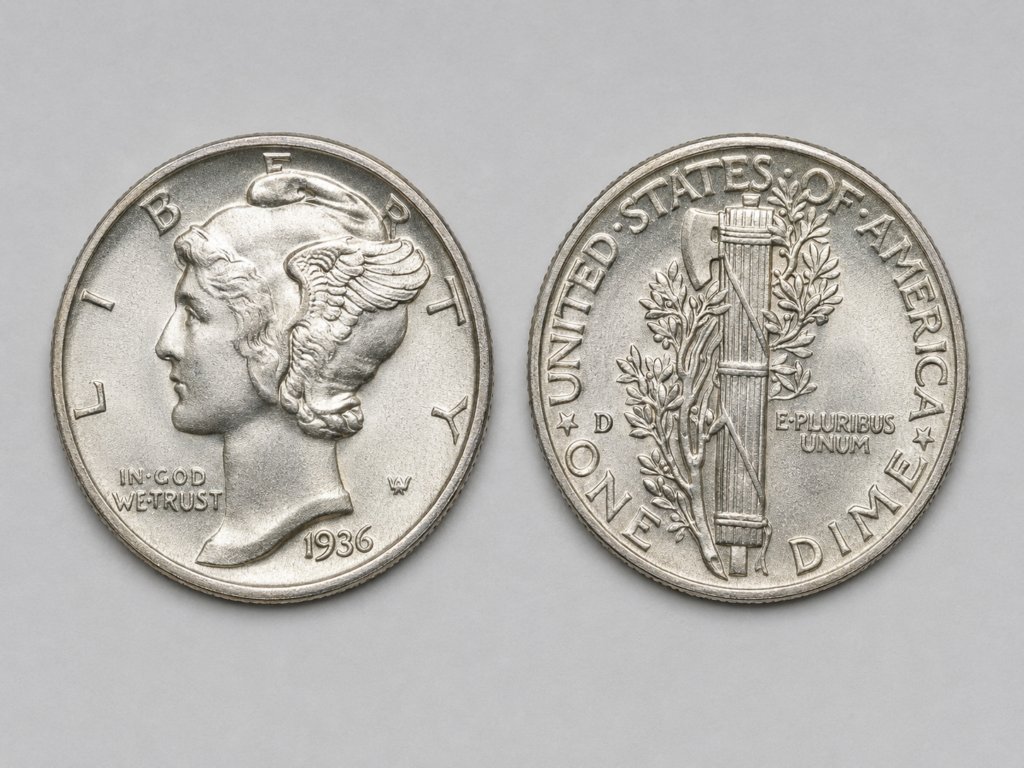
The Mercury dime — officially the Winged Liberty Head dime — ran for thirty years, from 1916 to 1945. Every piece is 90% silver and holds 0.07234 troy oz of silver, which puts a real floor under every common-date coin at the live silver spot. Three things drive premium above the floor: the 1916-D at a mintage of 264,000, the 1942/1 and 1942/1-D overdates, and the Full Bands designation on Mint State strikes.
The year-by-year chart, the identification steps, and the key-date list are below.
What is a Mercury dime worth today?
Most circulated Mercury dimes from the common-date 1930s and 1940s years trade at the silver floor — 0.07234 troy oz × the live silver spot — which works out to around $2 per coin at typical silver levels. Every $1 face value of Mercury dimes contains 0.715 troy oz of silver, the same per-dollar figure as every other 90% silver U.S. denomination, which is why junk silver bags are priced by face value across mixed denominations. Any dealer who buys junk silver buys common-date Mercury dimes by the bag.
Above the silver floor, the 1916-D sits in the four to five figures at every grade because of the 264,000-piece mintage. The 1921 and 1921-D sit in the low to mid hundreds in Good and climb into the four figures at Mint State. The 1942/1 overdate sits in the high hundreds in Good and reaches the five and six-figure range at Full Bands Mint State.
Full Bands Mint State examples of any date carry a significant premium over the same coin without the Full Bands designation, because the strike was soft on the reverse bands across many years. The chart below works through the year-by-year ranges; the identification, mintmark, and Full Bands sections explain what a coin in your hand actually is.
Is it really a Mercury dime? Identification before valuation
The obverse shows Liberty wearing a winged Phrygian cap, with the word LIBERTY arcing across the top and the date below the bust. The reverse shows a Roman fasces — a bundle of wooden rods bound around an axe — wrapped with an olive branch, with UNITED STATES OF AMERICA above and ONE DIME below.
The mintmark, when present, sits on the reverse to the left of the fasces near the base of the olive branch. Diameter is 17.91 millimeters. Weight is 2.5 grams. Composition is 90% silver and 10% copper — the same alloy as every U.S. silver dime from 1796 through 1964.
The most common identification mistake is confusing a Mercury dime with a Roosevelt dime or a Barber dime. A Roosevelt dime (1946 onward) shows Franklin Roosevelt’s profile bust facing left — no wings, no Phrygian cap, no laurel wreath above the head. A Barber dime (1892 through 1916) shows a profile Liberty bust wearing a laurel-wreath crown — no wings.
The winged cap and the fasces reverse are unique to the Mercury dime; either tell confirms the series. For the cross-era which dimes are silver question, see the identification reference.
How to read the date and mintmark
The date is on the obverse below the bust. The mintmark sits on the REVERSE, to the left of the fasces near the base of the olive branch — different from every other modern U.S. circulating coin, which puts the mintmark on the obverse. No mintmark means Philadelphia. D means Denver. S means San Francisco.
The series ran 1916 through 1945 with three production gaps: no Mercury dimes were struck in 1922, 1932, or 1933, so a coin offered as a 1922, 1932, or 1933 Mercury dime is either a different date with a damaged or altered last digit, or a counterfeit.
Two specific traps to head off. First: the 1916-D mintmark is small and frequently obscured by wear — an authentic 1916-D in Good condition can have a barely-visible D, which is exactly why this date is the most-counterfeited Mercury dime.
1916 Philadelphia coins with an added D mintmark are the standard fake; an unauthenticated 1916-D should be assumed altered until verified. Second: the 1942/1 and 1942/1-D overdates are invisible without magnification. The underlying 1 sits inside the loop of the 2 and shows as faint serif detail on the lower curve; reliable confirmation requires loupe work and PCGS or NGC photographic plates.
Why it’s called the Mercury dime — and the Full Bands designation
The U.S. Mint never officially called this coin a Mercury dime. The official designation is the Winged Liberty Head dime, and the figure on the obverse is Liberty wearing a winged Phrygian cap — a Roman symbol of freedom of thought. The popular nickname stuck because the public mistook the winged cap for the winged helmet of the Roman god Mercury.
Designer Adolph A. Weinman intended Liberty, not Mercury. Both names refer to the same coin, and both names appear in dealer listings, auction catalogs, and casual conversation.
Full Bands is the strike-quality designation that anchors Mint State valuation on this series. The reverse fasces shows two horizontal bands wrapping the bundle of rods near the midsection. On a fully struck coin, each band reads as two distinct parallel lines with a clear central separation; on a soft strike, the central separation disappears and the band reads as one solid stripe. PCGS and NGC both award the Full Bands (FB) designation when both midsection bands show a clear central split.
The strike was soft on these bands across many years — especially the early Denver and San Francisco issues, and famously the 1945 Philadelphia coin, where Full Bands examples are so scarce that the FB premium reaches the five figures on what would otherwise be a common-date coin. FB roughly doubles the standard Mint State price on common dates and multiplies key-date pricing meaningfully.
Mercury dime value chart by year and mintmark
The chart below covers every year of the series — no 1922, no 1932, no 1933, no coins struck — with each year shown by mint (Philadelphia, Denver, San Francisco) on its own row. Ranges are illustrative retail values at five condition tiers — Good (G-4), Fine (F-12), Extremely Fine (EF-40), Mint State (MS-65), and Mint State Full Bands (MS-65 FB) — pulled from PCGS Price Guide and NGC Coin Explorer at the time of writing.
“Floor” in the early columns means the coin trades at the silver floor of around $2 in those grades.
| Year | G-4 | F-12 | EF-40 | MS-65 | MS-65 FB |
|---|---|---|---|---|---|
| 1916 | $2–4 | $4–6 | $8–12 | $35–55 | $80–125 |
| 1916-D | $1,500–2,000 | $3,500–5,000 | $7,500–12,000 | $18,000–25,000 | $50,000+ |
| 1916-S | $3–5 | $6–9 | $25–38 | $115–165 | $400–575 |
| 1917 (P) | $2–4 | $4–6 | $10–15 | $55–80 | $185–265 |
| 1917-D | $5–8 | $20–30 | $80–115 | $325–475 | $1,400–2,000 |
| 1917-S | $3–5 | $5–8 | $20–30 | $135–195 | $725–1,050 |
| 1918 (P) | $3–5 | $5–8 | $30–45 | $130–185 | $360–525 |
| 1918-D | $3–5 | $6–9 | $25–38 | $185–260 | $2,200–3,200 |
| 1918-S | $3–5 | $5–8 | $25–38 | $200–285 | $1,600–2,300 |
| 1919 (P) | $3–5 | $5–8 | $15–22 | $100–145 | $250–365 |
| 1919-D | $7–10 | $25–38 | $130–185 | $400–575 | $5,500–8,000 |
| 1919-S | $5–8 | $15–22 | $90–130 | $300–435 | $5,000–7,500 |
| 1920 (P) | $2–4 | $5–8 | $15–22 | $80–115 | $235–340 |
| 1920-D | $3–5 | $10–15 | $60–85 | $200–285 | $2,400–3,500 |
| 1920-S | $3–5 | $8–12 | $50–75 | $185–265 | $1,400–2,000 |
| 1921 | $80–115 | $200–285 | $725–1,050 | $2,000–2,900 | $3,500–5,000 |
| 1921-D | $115–165 | $260–365 | $850–1,200 | $2,200–3,200 | $4,000–5,800 |
| 1923 (P) | $2–4 | $4–6 | $8–12 | $40–60 | $100–145 |
| 1923-S | $3–5 | $10–15 | $115–165 | $400–575 | $3,500–5,000 |
| 1924 (P) | $2–4 | $4–6 | $10–15 | $80–115 | $300–435 |
| 1924-D | $5–8 | $20–30 | $130–185 | $260–365 | $1,800–2,600 |
| 1924-S | $3–5 | $6–9 | $90–130 | $300–435 | $4,500–6,500 |
| 1925 (P) | $2–4 | $4–6 | $10–15 | $80–115 | $300–435 |
| 1925-D | $7–10 | $50–75 | $300–435 | $725–1,050 | $2,000–2,900 |
| 1925-S | $3–5 | $10–15 | $130–185 | $400–575 | $3,000–4,400 |
| 1926 (P) | $2–4 | $4–6 | $8–12 | $55–80 | $300–435 |
| 1926-D | $3–5 | $10–15 | $50–75 | $185–265 | $1,400–2,000 |
| 1926-S | $20–30 | $90–130 | $450–650 | $1,400–2,000 | $2,800–4,000 |
| 1927 (P) | $2–4 | $4–6 | $8–12 | $50–70 | $135–195 |
| 1927-D | $5–8 | $25–38 | $185–265 | $400–575 | $4,500–6,500 |
| 1927-S | $2–4 | $5–8 | $115–165 | $400–575 | $5,000–7,500 |
| 1928 (P) | $2–4 | $4–6 | $8–12 | $50–70 | $135–195 |
| 1928-D | $5–8 | $25–38 | $130–185 | $300–435 | $2,800–4,000 |
| 1928-S | $2–4 | $5–8 | $50–75 | $200–285 | $725–1,050 |
| 1929 (P) | $2–4 | $4–6 | $8–12 | $35–50 | $90–130 |
| 1929-D | $3–5 | $7–10 | $25–38 | $80–115 | $185–265 |
| 1929-S | $2–4 | $5–8 | $15–22 | $80–115 | $260–365 |
| 1930 (P) | $2–4 | $4–6 | $10–15 | $55–80 | $300–435 |
| 1930-S | $5–8 | $10–15 | $30–45 | $135–195 | $300–435 |
| 1931 (P) | $5–8 | $7–10 | $25–38 | $80–115 | $185–265 |
| 1931-D | $15–22 | $30–45 | $90–130 | $260–365 | $725–1,050 |
| 1931-S | $5–8 | $15–22 | $30–45 | $135–195 | $1,200–1,800 |
| 1934 (P) | Floor | $3–5 | $7–10 | $25–38 | $35–50 |
| 1934-D | Floor | $5–8 | $20–30 | $50–75 | $80–115 |
| 1935 (P) | Floor | $3–5 | $5–8 | $20–30 | $30–45 |
| 1935-D | Floor | $5–8 | $25–38 | $80–115 | $135–195 |
| 1935-S | Floor | $3–5 | $10–15 | $35–50 | $185–265 |
| 1936 (P) | Floor | Floor | $5–8 | $25–35 | $35–50 |
| 1936-D | Floor | $5–8 | $15–22 | $50–75 | $90–130 |
| 1936-S | Floor | $3–5 | $8–12 | $30–45 | $50–75 |
| 1937 (P) | Floor | Floor | $5–8 | $25–35 | $30–45 |
| 1937-D | Floor | $3–5 | $10–15 | $40–60 | $50–75 |
| 1937-S | Floor | $3–5 | $5–8 | $30–45 | $80–115 |
| 1938 (P) | Floor | Floor | $5–8 | $25–38 | $40–60 |
| 1938-D | Floor | $5–8 | $15–22 | $35–50 | $50–75 |
| 1938-S | Floor | $3–5 | $5–8 | $35–50 | $50–75 |
| 1939 (P) | Floor | Floor | $5–8 | $25–35 | $30–45 |
| 1939-D | Floor | Floor | $5–8 | $25–35 | $35–50 |
| 1939-S | Floor | $3–5 | $10–15 | $50–75 | $260–365 |
| 1940 (P) | Floor | Floor | $3–5 | $20–30 | $30–45 |
| 1940-D | Floor | Floor | $5–8 | $25–35 | $35–50 |
| 1940-S | Floor | Floor | $5–8 | $25–35 | $35–50 |
| 1941 (P) | Floor | Floor | $3–5 | $20–30 | $25–38 |
| 1941-D | Floor | Floor | $5–8 | $25–35 | $35–50 |
| 1941-S | Floor | Floor | $5–8 | $25–35 | $35–50 |
| 1942 (P) | Floor | Floor | $3–5 | $20–30 | $30–45 |
| 1942/1 (overdate) | $500–725 | $1,000–1,500 | $2,500–3,500 | $11,000–16,000 | $50,000+ |
| 1942-D | Floor | Floor | $5–8 | $25–35 | $30–45 |
| 1942/1-D (overdate) | $400–575 | $850–1,200 | $2,200–3,200 | $7,500–11,000 | $25,000+ |
| 1942-S | Floor | Floor | $5–8 | $25–35 | $40–60 |
| 1943 (P) | Floor | Floor | $3–5 | $20–30 | $30–45 |
| 1943-D | Floor | Floor | $5–8 | $25–35 | $30–45 |
| 1943-S | Floor | Floor | $5–8 | $25–35 | $90–130 |
| 1944 (P) | Floor | Floor | $3–5 | $20–30 | $30–45 |
| 1944-D | Floor | Floor | $5–8 | $25–35 | $30–45 |
| 1944-S | Floor | Floor | $5–8 | $25–35 | $30–45 |
| 1945 (P) | Floor | Floor | $3–5 | $20–30 | $10,000+ |
| 1945-D | Floor | Floor | $5–8 | $25–35 | $30–45 |
| 1945-S | Floor | Floor | $5–8 | $25–35 | $40–60 |
Last updated: June 2026. Cross-checked against PCGS Price Guide and NGC Coin Explorer at publication.
Philadelphia struck every year of production. Denver struck most years but produced the headline 1916-D rarity at 264,000 and the second-keyiest 1921-D at 1.08 million; Denver did not strike Mercury dimes in 1923 or 1930. San Francisco struck most years and produced no headline rarities of its own, but several semi-keys in the 1925 through 1931 window — and the famous 1945 Philadelphia Full Bands gap means that a 1945-S in Full Bands is one of the easier high-grade FB pickups in the series.
The 1942/1 (Philadelphia) and 1942/1-D (Denver) overdates were leftover 1941 dies repunched with a 2 for the new year; both are scarce in any grade and rare with Full Bands.
Key dates, overdates, and Full Bands worth a closer look
The Mercury dime market is dense with counterfeits and altered coins. Added-D mintmarks on 1916 Philadelphia coins are the most common fake in the series. The 1942/1 and 1942/1-D overdates attract inflated raw listings on eBay and other marketplaces.
Any coin you suspect of being a key date, an overdate, or a Full Bands Mint State example should be professionally authenticated by PCGS or NGC before sale — raw key dates routinely sell at half the slabbed price because buyers price in authentication risk. The list below covers the keys, the overdates, the semi-keys, and the Full Bands designation in the order they matter.
1916-D
The series key, mintage 264,000 — the lowest of any Mercury dime date by a wide margin. Worth low four figures in Good and climbs into the five figures at Mint State with Full Bands. The mintmark is small and easily obscured by wear, and 1916 Philadelphia coins with an added D are the canonical Mercury dime counterfeit. Authentication is non-negotiable.
1942/1 (Philadelphia) overdate
A 2 punched over a 1 in the date, visible under magnification as faint underdate detail inside the loop of the 2. Trades in the high hundreds in Good, into the five figures at Mint State, and into the six figures at Full Bands Mint State. The PCGS or NGC photographic plate is the standard reference for confirming the overdate.
1942/1-D (Denver) overdate
The Denver version of the same overdate. Less well-known than the Philadelphia version, slightly scarcer, and at Full Bands Mint State sits in the same five-to-six-figure range. Authentication carries the same weight here as it does on the Philadelphia variety.
1921
Philadelphia, mintage 1.23 million. Trades in the mid hundreds in Good and into the four figures at Mint State. Often overshadowed by the 1916-D, but a real key date in its own right.
1921-D
Denver, mintage 1.08 million. Trades in the mid hundreds in Good and into the four figures at Mint State; the 1921-D is harder to find with Full Bands than the 1921 Philadelphia.
Mid-series semi-keys
1919-D, 1919-S, 1920-D, 1925-D, 1926-S, 1927-D, 1931-D, 1931-S
Each carries modest premium across all circulated grades and meaningful premium at Mint State, with significant additional premium at Full Bands. The 1931-D is a popular Mint State Full Bands chase coin; the 1919-D and 1919-S Full Bands sit in the high four to low five figures.
1945 Philadelphia Full Bands
A common-date coin at the silver floor in circulated grades and an MS-65 condition rarity at Full Bands. The 1945 Philadelphia dies struck the fasces bands softly enough that Full Bands examples are extremely scarce; an MS-65 FB 1945 (Philadelphia) trades in the five figures despite the coin being common in MS-65 without Full Bands.
Full Bands (FB) designation, any date
A Mint State Mercury dime with both fasces midsection bands fully separated. The designation doubles or triples the standard MS-65 price on common dates and multiplies key-date and semi-key pricing meaningfully. PCGS uses FB; NGC uses FB; the two are interchangeable for buyers.
Frequently asked questions
What is a Mercury dime worth today?
Most circulated Mercury dimes trade at the silver floor — 0.07234 troy oz × the live silver spot, which works out to around $2 per coin at typical silver levels. The 1916-D, the 1921 and 1921-D, and the 1942/1 and 1942/1-D overdates carry collector premium far above the floor, and any Full Bands Mint State example trades at significant premium over the same coin without the designation.
Why is it called a Mercury dime if it's actually Liberty?
The U.S. Mint never officially called this coin a Mercury dime — the official designation is the Winged Liberty Head dime, and the figure on the obverse is Liberty wearing a winged Phrygian cap, a Roman symbol of freedom of thought. The public mistook the winged cap for the winged helmet of the Roman god Mercury and the nickname stuck. Designer Adolph A. Weinman intended Liberty, not Mercury.
How much silver is in a Mercury dime?
Every Mercury dime contains 0.07234 troy oz of pure silver in a coin weighing 2.5 grams total. The composition is 90% silver and 10% copper, the same alloy used in every U.S. silver dime from 1796 through 1964. Every $1 face value of Mercury dimes contains 0.715 troy oz of silver, which is the per-dollar figure used to price junk silver bags across all 90% silver U.S. denominations.
What is a 1916-D Mercury dime worth?
An authenticated 1916-D Mercury dime is worth low four figures in Good condition and climbs into the five figures at Mint State with the Full Bands designation. The 1916-D had a mintage of just 264,000 — the lowest of any Mercury dime year — and is the most-counterfeited date in the series. 1916 Philadelphia coins with an added D mintmark are the standard fake, so any 1916-D offered for sale should be slabbed by PCGS or NGC.
What does Full Bands mean on a Mercury dime?
Full Bands (FB) is a Mint State designation indicating that both horizontal bands wrapping the fasces midsection on the reverse show a clear central separation, so each band reads as two distinct parallel lines rather than one solid stripe. The strike was soft on these bands across many Mercury dime years, so Full Bands Mint State examples are scarce; the designation roughly doubles the standard MS-65 price on common dates and multiplies key-date pricing meaningfully. PCGS and NGC both use FB and the two designations are interchangeable for buyers.
What is the 1942/1 Mercury dime?
The 1942/1 Mercury dime is a famous overdate variety where a 2 was punched over a 1 in the date on a leftover 1941 die — the underlying 1 shows as faint serif detail inside the loop of the 2 when viewed under magnification. The variety exists in two forms: 1942/1 (Philadelphia, no mintmark) and 1942/1-D (Denver, with the D mintmark on the reverse). Both are scarce, both are routinely counterfeited, and authentication by PCGS or NGC is the standard before sale.
Were any Mercury dimes minted in 1922, 1932, or 1933?
No — the U.S. Mint struck no Mercury dimes in 1922, 1932, or 1933. 1922 was a silver-dollar production year and dime production was suspended; 1932 and 1933 were Depression-era years when dime production was suspended entirely. A coin offered as a “1922 Mercury dime” or a “1933 Mercury dime” is either a different date with a worn or altered last digit, or a counterfeit. Production resumed in 1934.
This article is for informational and educational purposes only and does not constitute investment, sale, or numismatic advice. Value ranges in the chart are illustrative; cross-check against PCGS Price Guide and NGC Coin Explorer before any sale. Any suspected key date, overdate variety, or Full Bands Mint State example should be professionally authenticated by PCGS or NGC.
